
Sustainability
Efficiency begins with the design.
A motor catamaran is not efficient simply because of its propulsion system. What matters is the interaction between low weight, hydrodynamically efficient hulls, appropriate engine power, effective insulation and durable technology.
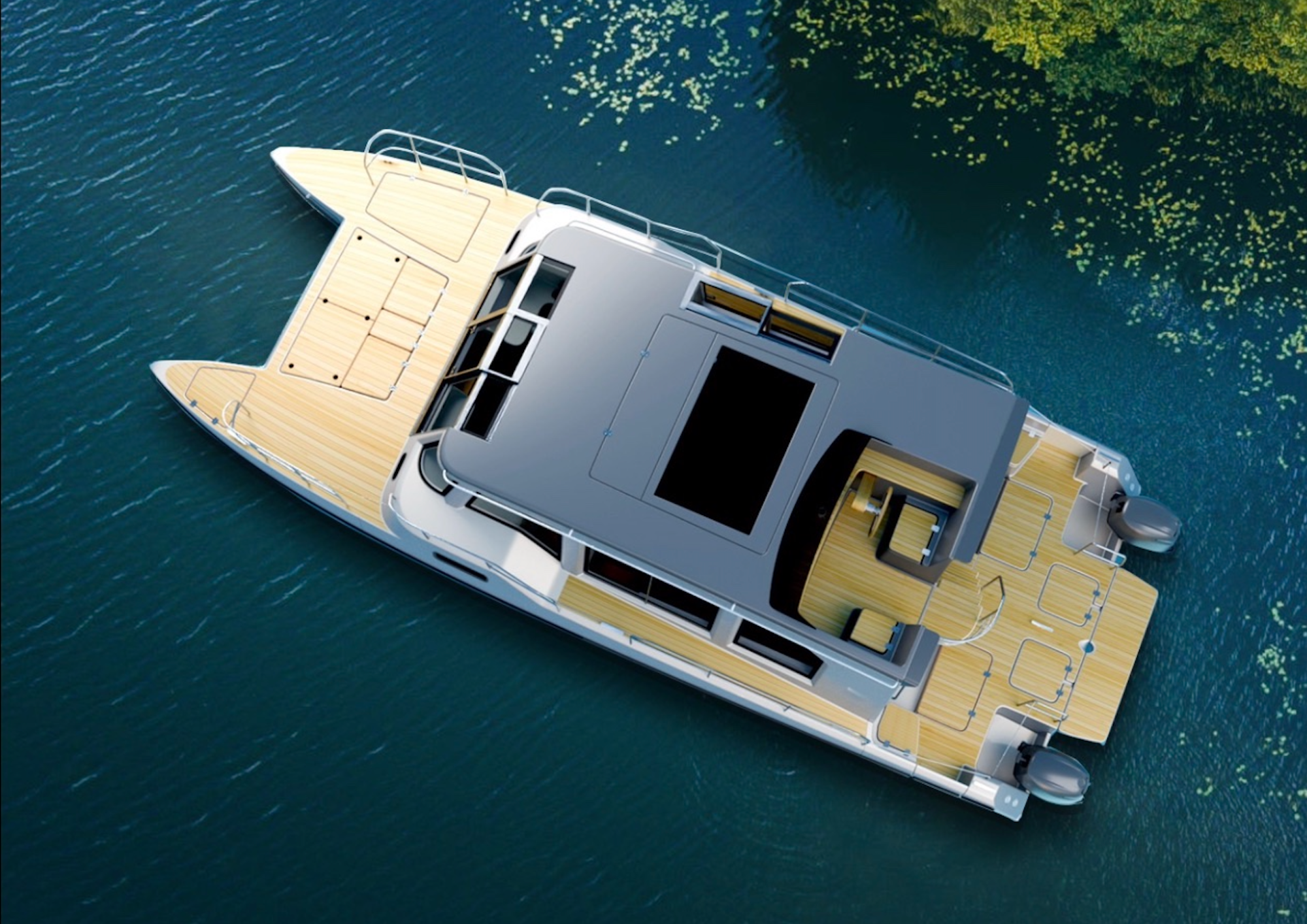
Less resistance
Lightweight construction. Efficient cruising.
The less mass that has to be moved and the less water that has to be displaced, the lower the energy requirement can be. This is why both motor catamarans are designed as lightweight sandwich constructions.
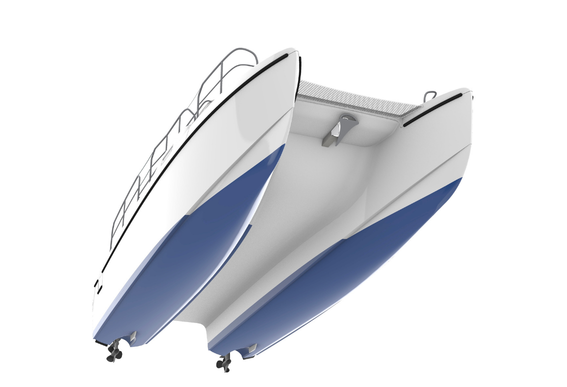
Lightweight sandwich construction
Vacuum technology makes it possible to produce components that are both light and strong. This saves material and reduces the weight that has to be moved on every journey.
Hydrodynamically efficient hulls
Slender catamaran hulls and carefully developed lines reduce resistance through the water. Neuland 37 has been hydrodynamically optimised for different speed ranges.
Appropriate engine power
Efficient hull forms provide good cruising performance with moderate propulsion power. Lower engine speeds and a speed suited to the cruising area reduce fuel consumption further.
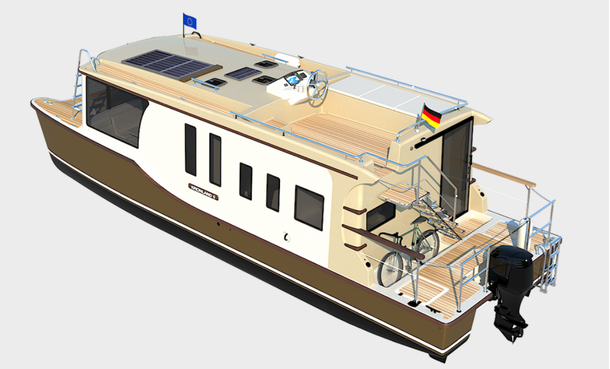
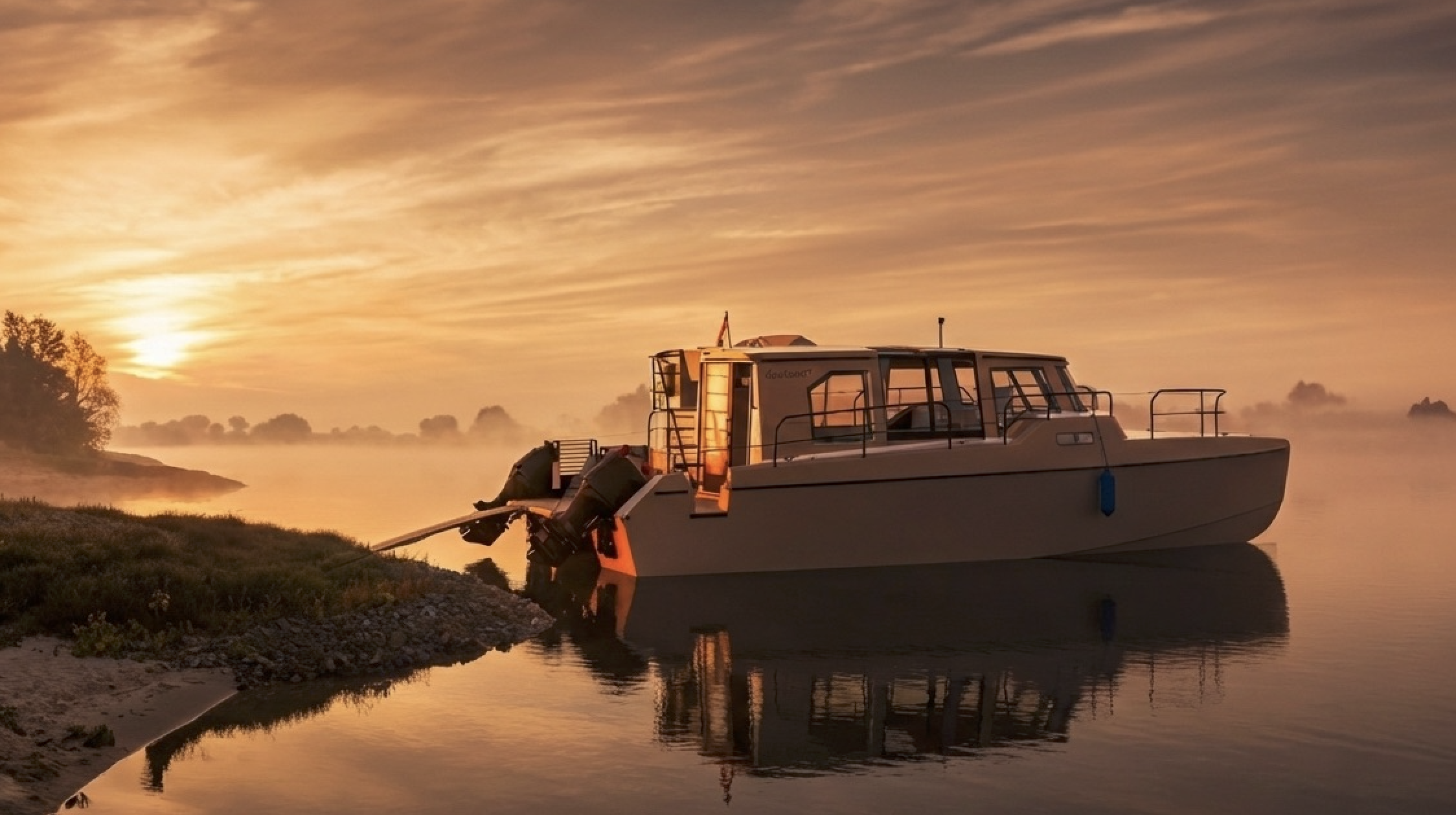
Designed for a long service life
Easy to maintain and care for.
Sustainability also depends on how long a motor yacht can remain in use. Proven composite construction, practical design, accessible technical systems and replaceable components make maintenance and repairs easier.
The outboard engines are located outside the living area. They are readily accessible for maintenance and can be replaced as technology advances. The propellers do not extend below the hulls, reducing the risk of damage in the event of grounding.
Energy on board
Comfort with lower energy consumption.
Well insulated throughout
Effective insulation and double glazing help retain heat in winter and reduce heat entering the interior in summer.
Making sensible use of the sun
Solar panels support the vessel’s electrical supply. On both models, a combined photovoltaic and solar-thermal hybrid system provides electricity and hot water of up to 70°C.
Conscious energy use
Carefully selected onboard equipment and straightforward technical solutions avoid unnecessary energy consumption. What matters is equipment that genuinely suits life on board.
Autonomy
Fewer detours. More time where you want to be.
Large tank capacities extend the intervals between supply stops. This provides greater independence and makes relaxed, forward-looking route planning easier. The benefit becomes particularly sustainable when speed, route and consumption are consciously coordinated.
Responsibility
Experience nature with consideration.
Shallow draught provides access to peaceful cruising grounds and anchorages. Precisely in these places, considerate navigation, low speeds, respect for protected areas and responsible handling of wastewater and waste are essential.
Neuland 37 and KRONLAND II combine access to exceptional waterways with the possibility of living comfortably aboard for extended periods. Sustainable cruising begins with the conscious use of energy and materials and respect for the surrounding environment.
Discover Neuland 37Discover KRONLAND IICompare the motor yachts